Intern Projects
Erica Hornung – Theodore Roosevelt’s Evolving Views on Women’s Suffrage
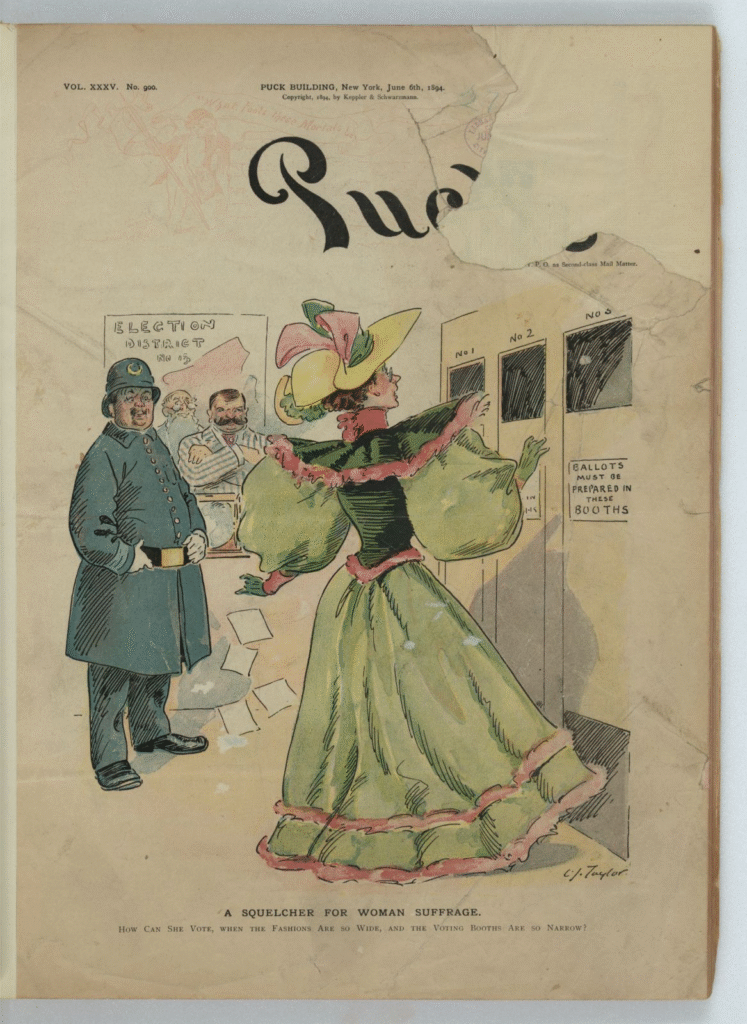
Voting has always been very important to me, more of a duty to my country than a right granted only relatively recently by the 19th Amendment. When I learned, as a child, that women in the United States have only had the right to vote for fewer than 100 years, I was outraged, in the way that only a child could be. As an adult, and in particular as an archivist, my interest in history has always been strengthened by learning about how women, specifically, experienced it.
So, when I began my internship with the Theodore Roosevelt Center in June 2020, just weeks before the centennial anniversary of the ratification of the 19th Amendment on August 18, it seemed obvious that the digital humanities component of my work should involve TR’s relationship to women and women’s rights. While I had a vague notion that TR himself was quite Victorian in his personal attitudes towards women, I felt sure he must have been a great public crusader for women’s rights… right?
Well… yes and no.
The period my colleagues and I were working in, covering the end of TR’s second term in office, seemed strangely silent on the topic. I found a dizzying variety of materials containing a whirlwind of ideas in the letters to and from the White House: escalating tensions with Japan; African safari planning; hunting, horses, pets, children, Senators, postmaster appointments, naval bases, royal gossip, and more! All were covered in the letters I worked with. Why weren’t there any letters about the Suffragists of the time? Was I wrong about my admittedly simplistic hope that TR fought for my right to vote?
It was with those questions in mind that I started digging into other materials available in the Theodore Roosevelt Digital Library. Using the advanced research methods I learned during my internship, I found a variety of records relating to TR’s thoughts regarding women, their place in society, and their right to vote. I hope the resulting timeline, created with the digital humanities tool Sutori, begins to shed light on these questions, and that it might also spark your interest in further exploration of the digital library.
Through this internship, I have learned, in a very tangible way, that the reality of a topic is rarely simple, that history doesn’t always lend itself to convenient story lines, and that life, then as now, can be messy. So it is with TR’s evolving views on women’s suffrage.
ENTER TIMELINE BY CLICKING ON THIS IMAGE:
