2008 TR Symposium
Theodore Roosevelt: The Conservationist in the Arena

The third annual symposium was opened by Theodore Roosevelt himself, who one hundred years ago called the first national Governors’ Conference to address America’s conservation and resource issues. The symposium examined his contributions to the American conservation movement by considering his life and work in the American West, his reading in conservation literature, and the friendships he forged that influenced his conservation ethic and legislative program.
The 2008 symposium included a discussion of the future of the Little Missouri River Valley in Roosevelt’s beloved Badlands, including representatives from private and federal conservation agencies, the ranching industry, oil and gas development, and tourism.
The event also featured a staging of selected scenes from “Old Four Eyes,” a Thomas M. Patterson drama depicting the life and adventures of Theodore Roosevelt in the Badlands from 1883 to 1886. This year marked the 50th anniversary of the play’s premiere at the Burning Hills Amphitheatre in Medora, N.D.
A highlight of the symposium was a trip to Medora, where representatives from federal conservation agencies established by President Roosevelt presented a “report card” on their agencies’ activities in the past 100 years. Following the panel presentation, the hardiest participants braved an early North Dakota snow to hike in the Badlands with field guides from Theodore Roosevelt National Park.
Speakers
 DR. DOUGLAS BRINKLEY
A renowned author and distinguished professor of history at Rice University in Houston, Tex., Brinkley has had five of his award-winning books selected as New York Times Notable Books of the Year. These include Dean Acheson: The Cold War Years, The Reagan Diaries, and The Great Deluge: Hurricane Katrina, New Orleans, and The Mississippi Gulf Coast.
The Chicago Tribune has called him “America’s new past master” and he was named 2004 Humanist of the Year by the Louisiana Endowment for the Humanities. Currently, he is writing a book about Theodore Roosevelt, which is scheduled for publication in March 2009.
 ROBERT MORGAN
Morgan is Kappa Alpha Professor of English at Cornell University and the author of numerous works of fiction, non-fiction and poetry.
His newest book, Boone: A Biography, was a finalist for the Los Angeles Times Literary Award. His poetry collections include Zirconia Poems, Land Diving, Trunk & Thicket, Groundwork, and Green River: New and Selected Poems. Among his works of fiction are The Mountains Won’t Remember Us, The Hinterland, The Truest Pleasure, and Gap Creek, which was selected for the Southern Book Critics Circle Award for Fiction for 2000 and was a New York Times bestseller.
DR. DONALD WORSTER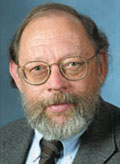
Worster holds the Hall Distinguished Professorship Chair in American History at the University of Kansas. His principal areas of research and teaching include North American and world environmental history and the history of the American West.
His publications include A Passion for Nature: The Life of John Muir, A River Running West: The Life of John Wesley Powell, and eight other books, including Rivers of Empire, which deals with the development of water resources in the West, and which was nominated for the Pulitzer Prize.
 DR. DAN FLORES
Flores is A.B. Hammond Professor of Western History at the University of Montana-Missoula. He specializes in Western environmental history and is the author of seven books, most recently Southern Counterpart to Lewis & Clark: The Freeman & Custis Red River Expedition of 1806, The Natural West: Environmental History in the Great Plains and Rocky Mountains, and Horizontal Yellow: Nature and History in the Near Southwest.
CLAY JENKINSON
Symposium moderator Jenkinson is a Rhodes and Danforth scholar, author and first-person historical interpreter.
As a renowned humanities scholar, Jenkinson travels widely, giving lectures on a variety of topics, and performing as Thomas Jefferson, Capt. Meriwether Lewis and Theodore Roosevelt. He adopts the persona of Jefferson each week for his nationally syndicated radio show, The Thomas Jefferson Hour®.
Jenkinson is the author of Theodore Roosevelt in the Dakota Badlands, Message on the Wind, A Vast and Open Plain, and Becoming Jeff.
Photos
Panel moderator Dr. Dan Flores joined participants on an outing to Medora, North Dakota, to experience the badlands where Roosevelt ranched and lived.

Representatives from ranching, energy development, tourism, and government and private conservation organizations discussed the future of the Little Missouri River Valley.

Participants braved cold temperatures to “live the strenuous life” by joining Park Ranger Sarah Nystrom on a hike.

Dr. Douglas Brinkley took time to autograph copies of his books following his keynote address at the 2008 Symposium.

Roosevelt loved the solitude of the Little Missouri River Valley, now part of the national park that bears his name.
At the Chuckwagon Restaurant in Medora, Symposium participants listen to a “conservation report card” from representatives of federal agencies Roosevelt founded. In the background are examples of the wildlife Roosevelt came to North Dakota to hunt.

The 2008 Symposium marked the 100th anniversary of the first national governors’ conference, called by TR in 1908 to discuss the topic of conservation. Here, TR greets participants and challenges them to reflect on this matter of national significance.

Videos
Opening remarks and Theodore Roosevelt’s welcoming speech as portrayed by Clay S. Jenkinson
Dr. Douglas Brinkley, keynote speaker, delivers his lecture “I So Declare It: Theodore Roosevelt, The Boone and Crockett Club, and The Making of a Conservationist” on October 9, 2008.
Robert Morgan delivers his lecture “Daniel Boone’s Dream: The Mother World of the Wilderness, and Theodore Roosevelt” on October 10, 2008.
Dr. Donald Worster delivers his lecture “The True Wealth of Nations: Theodore Roosevelt and the American Conservation Ethic” on October 10, 2008.