Intern Projects
Courtney Buchoski – The Orphan Train Movement
Originally posted to the TR Center blog in three parts in September and October, 2019.
Part 1, September 30:
This is part one of a three-part series about the Orphan Train Movement. Part one considers the history of the child-saving movement in New York City.
In 1904, a legal case from territorial Arizona exploded onto the national scene. Newspaper readers were shocked by the tale of woe told by the Catholic New York Foundling Hospital, who ran into trouble as they tried to place orphans in adoptive homes in the West.
U.S. District Attorney Frederick S. Nave described the case to Attorney General William H. Moody in a letter. The Foundling Hospital brought eighteen orphans, ages two to four years old, to Clifton, Arizona, to find homes. All but two of these children were adopted by indigenous Mexican laborers. Only a few days later, the white residents of the town took the children back, based on reports by the manager of a mining company of the “unfitness of the Mexican laborers to care for the children properly.” White families who the government deemed “worthy of respect” took the children, but soon faced legal protests from their original adoptive parents.

While it may seem odd that orphans were bartered and traded in the early twentieth century, this legal case is part of a much larger historical discussion about child welfare, religion, racism, and imperialism in the American West over the course of the long 19th century. It is a story that involves generations of Roosevelts and the mixed-up morals of urban philanthropists in New York City.
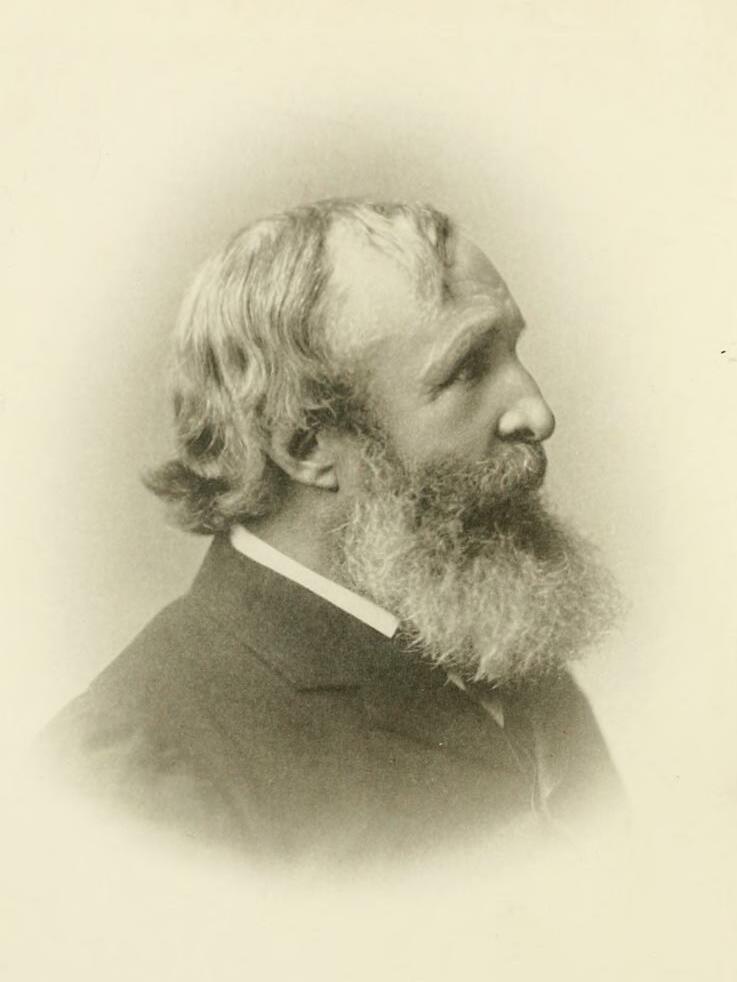
The orphan train movement began in 1853 among the Protestant elites of New York in response to the city’s rapidly increasing population. Many of the metropolitan elite believed that waves of Catholic immigrants posed a threat to the very foundations of the Republic. Local minister Charles Loring Brace harnessed these anxieties about the future of the union when he founded the Children’s Aid Society (CAS) in 1853. He advocated the removal of immigrant children from New York City into Protestant homes in the West, where he believed they would grow into genuine Americans. In the First Annual Report of the CAS, Brace expressed the concerns of many of his contemporaries, who worried that the majority of immigrants were not the “good—sober, hard-working people, who have spread over the country and become mingled with our population,” but the worst kind of immigrant, who “settled and stagnated in the City,” filling the streets, where “vice and laziness stimulated each other.” Brace feared that if the children of Catholic immigrants grew up impoverished on the streets of the city, they would easily be tricked by demagogues, and may “easily turn the balance of an election.”
From 1853 to 1929, the CAS sent around 200,000 children to the West, placing them with rural families who agreed to raise them in exchange for their labor. The society removed children from immigrant neighborhoods, particularly those with high densities of German and Irish Catholic residents. Some of the children the society “placed out” in western families were orphans, others half orphans, having one living parent, and some were not orphans at all. All of the children were, according to Brace, “at the turning point of their lives,” and could still be saved through his intervention. The CAS envisioned the West as a haven away from the chaos of the city, a place in which immigrant children could learn the values of republicanism—education, Protestantism, and the superiority of free labor.
The children who went west in these ventures had a variety of experiences. Some escaped on the journey west, showing back up on the streets of New York, or in the custody of their parents, who had not given permission for their departure. Some reported extensive abuse at the hands of their new families, who treated them as cheap labor, rather than members of the family. A few, including Andrew H. Burke, found themselves in good families and went on to succeed. In Burke’s case, he later became the governor of North Dakota. A majority toiled away as agricultural laborers until they turned eighteen and started their own lives in the West.
Keep reading in part two to learn how Catholics came to dispute the CAS and how the Roosevelt family became involved in their mission.
Part 2: October 7
In part two of a three-part series about the Orphan Train Movement, Courtney Buchkoski tells the story of the Catholic and Protestant contention over orphans in New York City.
The idea of sending orphans west caught on fast among the New York elite. Brace’s mission of expansion through evangelization, and its promise to Americanize immigrants, resonated with the debates plaguing the city’s politics. The desire by elites to control immigrants grew stronger in 1863 with the outbreak of the New York City draft riots. Brace’s fear that immigrant populations would someday revolt against the Protestant establishment seemed to come true for five days in July 1863, when armed mobs disrupted the enforcement of federal conscription laws. Poor New Yorkers resisted the draft law because of its unevenness—wealthy men could avoid the draft by paying three hundred dollars or providing an acceptable substitute. Many of the participating rioters were Irish Catholics, who attacked black city dwellers in protest of the draft enforcement. Rioters killed an estimated one hundred and twenty people, most of whom were black.
Although the Catholic Church opposed the work of the Children’s Aid Society (CAS) from the society’s inception, 1863 proved to be a turning point in the Church’s ability to combat the society. The CAS relied on nativist rhetoric about immigration as it centered its removal efforts in Catholic neighborhoods and fought to deny Catholic schools public education funding. During the draft riots, Irish residents worried that they would be imprisoned for resisting the draft, which would leave their children destitute, or at risk of removal by the CAS. The Catholic Church blamed Protestants for the events of the draft riots, claiming that the CAS policy of breaking up families exacerbated class antagonism and pushed the poor to violence. They believed that instead of child removal, the city of New York should focus on providing money to urban child care institutions.
Part of the Catholic turn toward politics in New York City included a concerted effort to thwart CAS child removal. Starting in 1863, the Church began their own placing-out program, including the one run by the Foundling Hospital. The threat that Catholics would successfully overtake the Protestant evangelization program drew in even more supporters, including the Roosevelt family. Theodore Roosevelt Sr. was a prime trustee of the CAS, and especially involved in providing funding for schools and lodging houses, where orphans lived until they found homes in the West. He was on the Board of Trustees from 1867 to 1878, and his cousin, James R. Roosevelt, served from 1878 to 1911. James R. Roosevelt also almost single-handedly funded the Beach Street Italian School until 1898. When Theodore Roosevelt Sr. died in 1878, the CAS meeting eulogized his devotion to the society, proclaiming, “It is not too much to say that he was an important individual factor in all that has been done and accomplished in the society.” Theodore Roosevelt Jr. grew up eating Thanksgiving and Christmas dinners with the orphans, and in 1880 took over the task of supporting the CAS from his father. By the time Roosevelt was President, he was intimately familiar with the politics of child-saving.
Keep reading in part three to learn how the history of the Orphan Train Movement and the Roosevelt involvement influenced the 1904 Arizona case.
Part 3: October 16
In part three in her blog series, intern Courtney Buchkowski tells the story of how the Arizona orphan train case was resolved.
When the story of the orphan train mishap in Arizona came across his desk in 1904, President Roosevelt was more than familiar with the stakes of the debate. The Arizona case spoke to the continued danger of a West run by non-white workers and the Catholic Church. Going back to the letter between U.S. District Attorney Frederick S. Nave and Attorney General William H. Moody with the full historical context of the orphan train movement, it is easier to read between the lines to see the anxiety of politicians in the East. Nave reported that Mexican families were unable to take care of the children because they were “the lowest type of Mexican Indians” who were “illiterate, and live in surroundings of poverty, squalor, filth and notorious immorality.” Historians have shown that these types of racial arguments about brown persons being carriers of disease were used to dispossess Mexican-Americans from their homes in this period.
Roosevelt’s intimate involvement in the orphan train movement was not his only connection to this case. The mining manager who reported the Mexicans as bad parents, Charles E. Mills, had been a Rough Rider with Roosevelt, and considered the President a friend. Furthermore, President Roosevelt’s promotion of the term “race suicide,” an early pronouncement of popular eugenic policies, figured prominently in the discussion. Roosevelt declared in 1903 that minorities and immigrants were outproducing white mothers. He condemned elite, white women, the best American “stock,” for producing too few children, while those of inferior blood lines produced too many. If the white orphans of New York were to be adopted by persons of color in the West, would it not lead to a similar result? Unlike the Protestant Children’s Aid Society (CAS), whose goal was to convert orphans and make them more like white elites, the Foundling Hospital was entrusting this task to racial undesirables.
Beyond the racial implications of the case, Nave also made a religious argument against the Mexicans, claiming that the children were given beer and that the priest who placed the children guilted the families into adoption by telling them it “was a religious duty.” Here, we see two of the most famous nativist arguments against Catholics—intemperance and blind obedience to clergy.
This case of orphan abduction, in which the courts had to decide whether to allow the children to live with their original Mexican-American parents, or their white abductors, brought over fifty years of elite anxiety about the nation to the surface. Just as New York elites were concerned by the proliferation of immigrants before the Civil War, they continued to fret over the supremacy of the white race in the West at the turn of the century. When considering the long history of the CAS, which took Catholic children off the streets of New York and placed them in Protestant homes, it is not surprising that a judge in charge of the case ignored the pleas by nuns to keep children in their faith communities. Issues of race were far more pressing. The judge praised the “Americans” who saved the children from “degraded half-breed Indians” and allowed their white abductors to keep them.
This case was not an isolated or bizarre incident, but one in a long line of debates about what the nation would look like and who would hold power. It has clear implications for the type of nation Theodore Roosevelt and other Progressives were trying to build, and the types of citizens who mattered most to those in power.
Further Reading
Fitzgerald, Maureen. Habits of Compassion: Irish Catholic Nuns and the Origins of New York’s Welfare System, 1830-1920. Urbana: University of Illinois Press, 2006.
Gordon, Linda. The Great Arizona Orphan Abduction. Cambridge, MA: Harvard University Press, 1999.
Holt, Marilyn Irvin. The Orphan Trains: Placing out in America. Lincoln: University of Nebraska Press, 1992.
O’Connor, Stephen. Orphan Trains: The Story of Charles Loring Brace and the Children He Saved and Failed. Boston: Houghton Mifflin Company, 2001.