Collections
Notes from the National Park Vagabond – Wheeler National Monument (Wheeler Geologic Area)
Our National Park Vagabond didn’t let the remoteness of the former Wheeler National Monument stop her from her quest to visit all 23 national parks and monuments established under TR. Valerie and her travel companions rented a UTV to reach the geologic formations. This was originally posted to the TR Center blog in October 2021.
A few years ago, at the annual Theodore Roosevelt Symposium at Dickinson State University, I told someone I was visiting the 23 national parks and monuments established during TR’s presidency. He mentioned Wheeler National Monument and said, “That one is so remote, you have to just wave to it from the highway.” In my mind, the challenge was on!
I did some research and conceived a plan. This September, I contacted 4 adventurous friends who agreed to accompany me to the spot. Raymond (Texas), Bruce (South Dakota), Jim and JoAnn (New Mexico) and I met in the small town of Creede, Colorado (elevation 8852’), where we rented rooms in a cozy lodge. We also rented a 6-person Kawasaki Mule. Unlike some UTVs that zip around noisily in the backcountry, ours was a large, slow, quiet crawler so we could carry on a meaningful conversation as we plugged along.
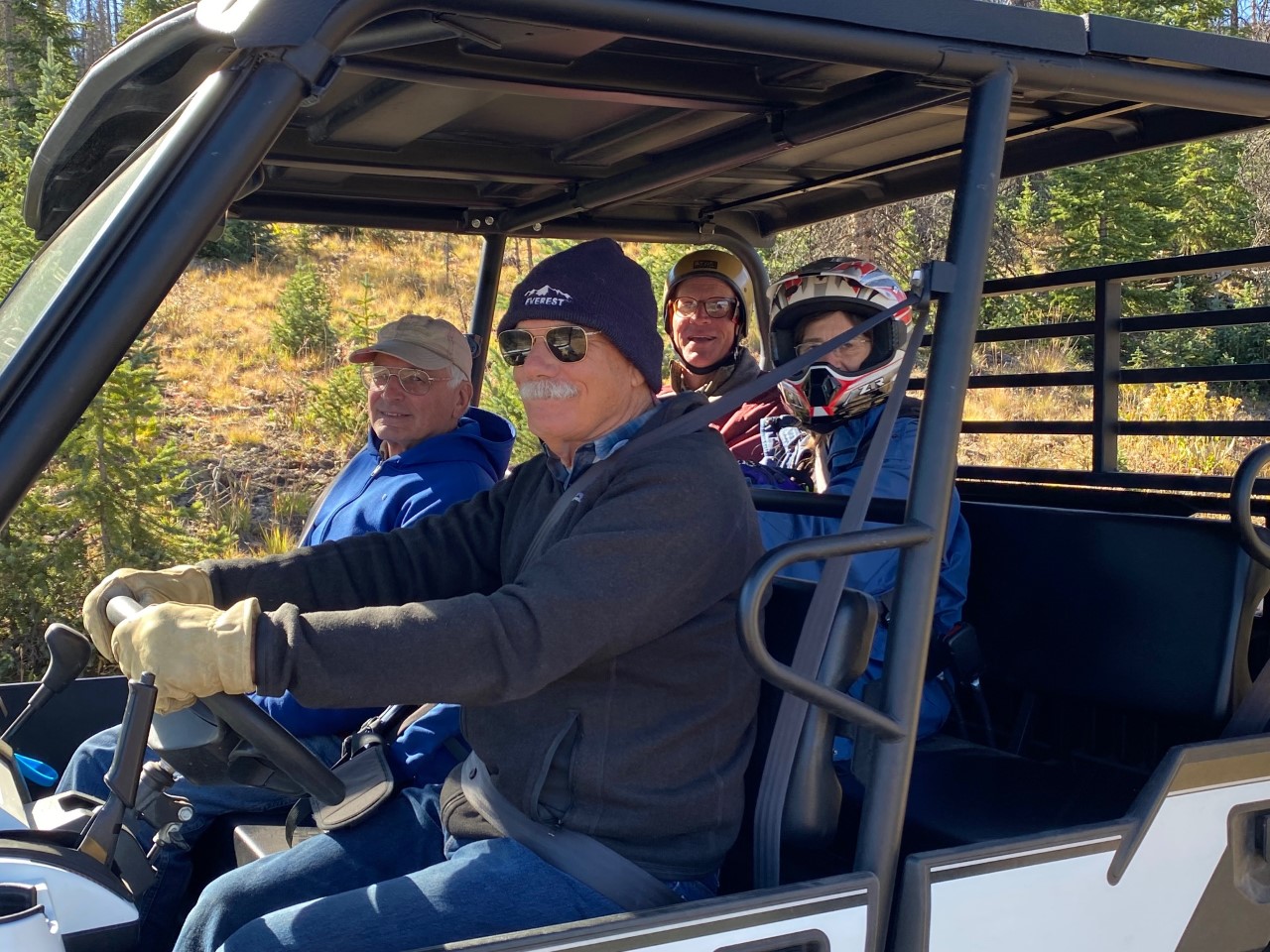
We started early after a hearty breakfast. Just in case, I took extra gallons of water and enough snacks for 3 days. We picked up our UTV on the highway near the Rio Grande and started up the mountain. The first 10 miles of the road were smooth and car-worthy. After that, at a wide spot called Hansen’s Mill, we turned onto what the U.S. Forest Service (USFS) calls a “grueling 14-mile road, extremely rough with deep ruts” that would take us near the Wheeler area. It was a beautiful early fall day and the aspens were turning gold. Most of the journey was rough, across rocks, gullies, hills, water, and the deepest ruts I had ever seen on a backcountry road. We traveled at 4 to 10 mph most of the time. It took us 3 hours to navigate the 14 miles to the parking spot. Although there are a few 4×4 trucks that can make this road, most cannot. We saw only a few UTVs, a dirt bike, and two hikers at the stopping point.
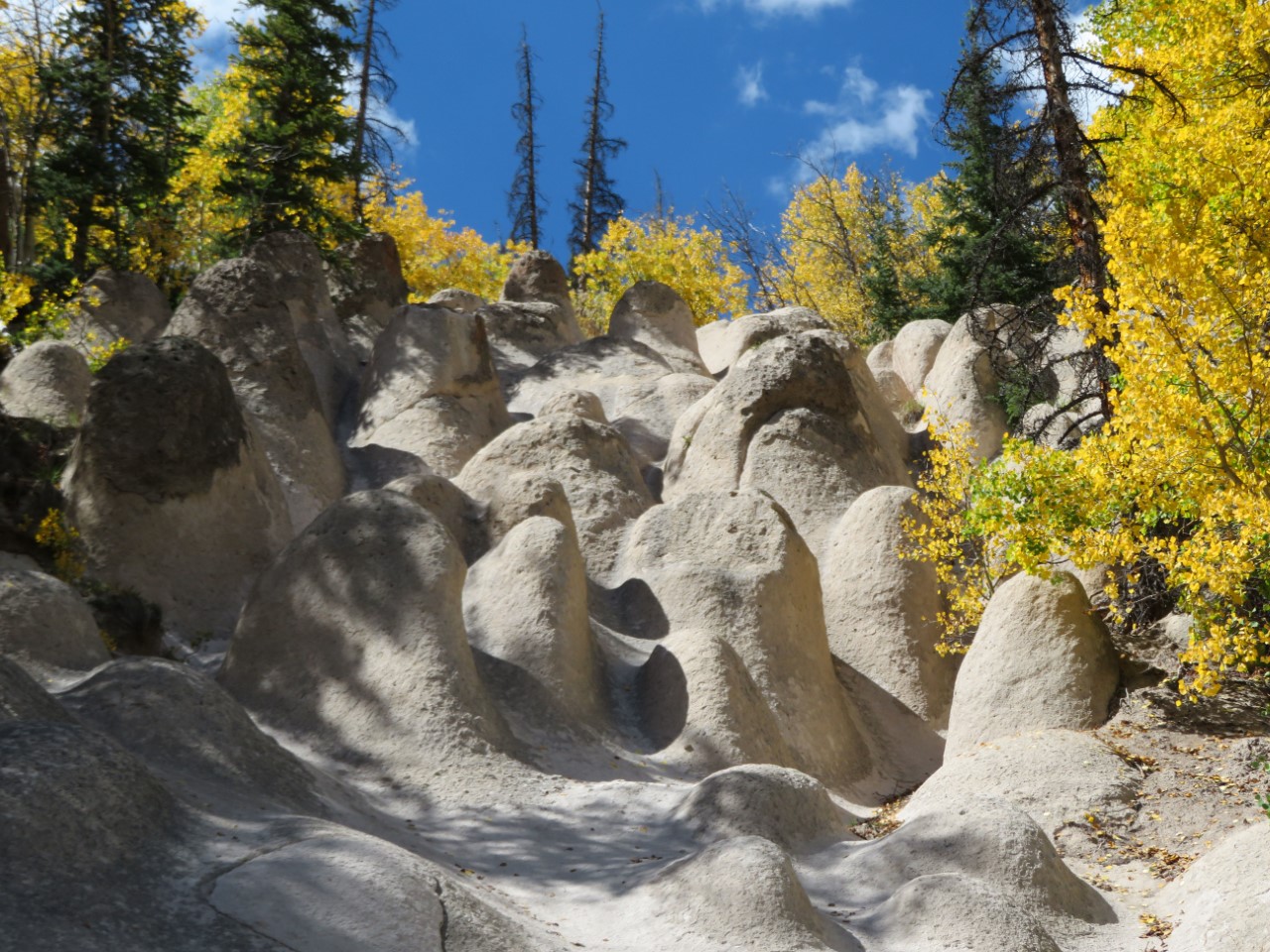
At the end of the road is the boundary of the designated Wilderness, where vehicles are prohibited. We were more than happy to hike. We hiked only a couple of miles, but at 11,500 feet, we had to breathe heavily to get to the stunning overlooks. The USFS says the Wheeler Geologic Area may be Colorado’s most unusual geologic formation – fine, light-gray volcanic tuff compressed into rock and wildly eroded into domes, capstones, needles, spires, caves, ledges, pinnacles, ravines, and balanced rocks.
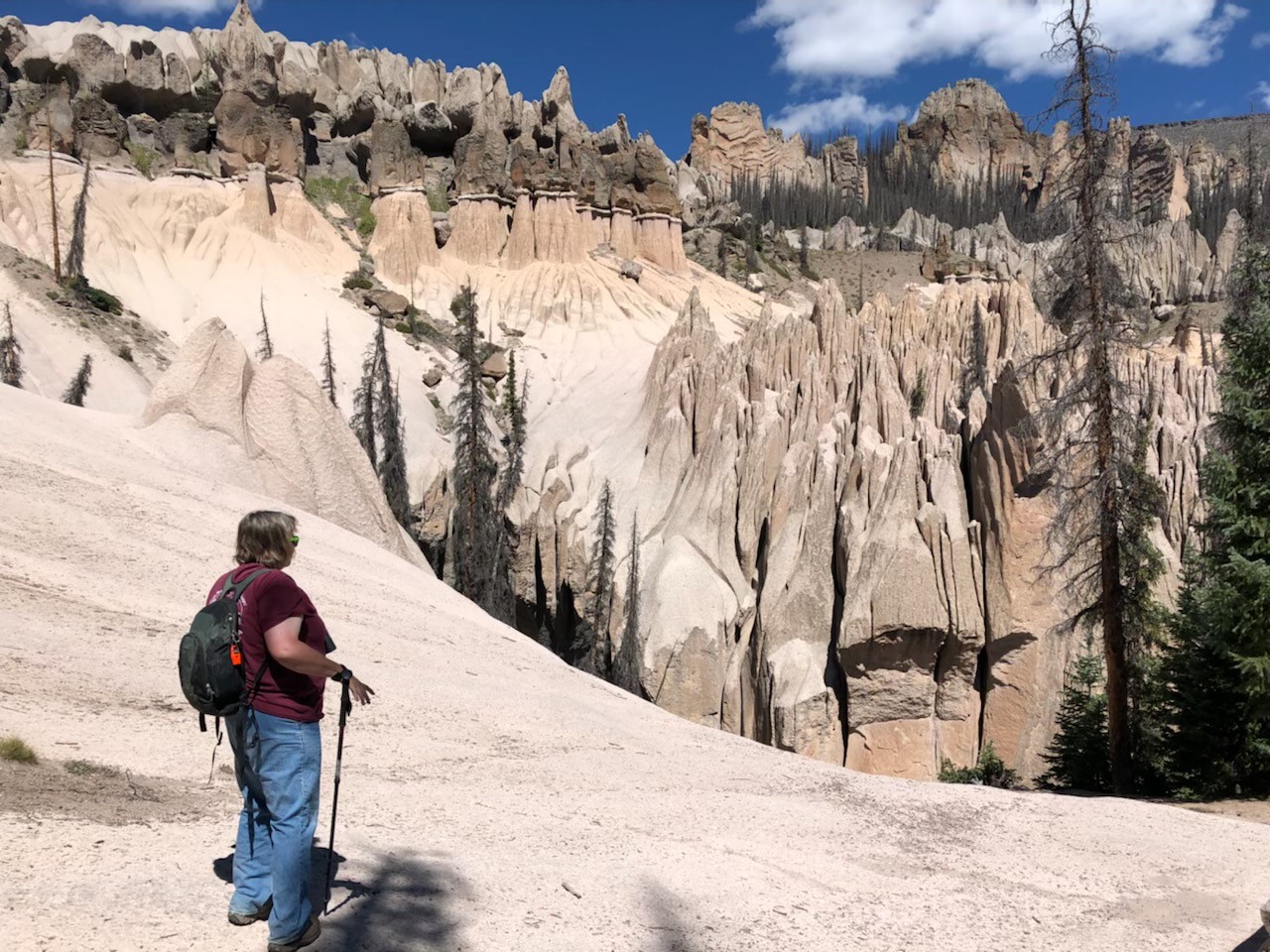
It was spectacular. After we descended from the upper overlook, we took a fork in the trail to a lower overlook. We could have stayed all day to watch the light play on the rock formations, but it was already getting late. We hiked back to our Mule and began the long, slow drive back. Raymond decided to hike 7 miles back to Hansen’s Mill. The trail is half the length of the road, and almost as fast for a strong hiker. He returned exhilarated. We got back to Creede before dark, and enjoyed an outdoor dinner to celebrate our adventure together. It was a great expedition.
How did Theodore Roosevelt find out about this remote place? A Forest Supervisor, Frank Spencer, and a local hotel owner named Elwood Bergy wrote a glowing, detailed report about the geologic wonder and sent it with photos to President Roosevelt. Spencer was called to Washington to make a presentation directly to Chief Forester Gifford Pinchot. Within 3 months of receiving their report, TR proclaimed 300 acres as a National Monument on December 7, 1908. The proclamation cited “volcanic formations… of unusual scientific interest as illustrating erratic erosion.” It was Colorado’s first national monument.
The monument was named after George M. Wheeler of the U.S. Army Corps of Engineers, who surveyed much of the Southwest from 1872 to 1879. It is unlikely that he ever saw the geologic area, but he sure did get around. The highest mountain in New Mexico, Wheeler Peak (13,161′), was named for him. I’ve climbed that mountain. Wheeler Peak, Nevada, in Great Basin National Park is also named for him, and is the second highest peak in the state (13,065′). I’ve climbed that peak too.
The National Park Service (NPS) did not yet exist when TR proclaimed Wheeler National Monument, so it was under the jurisdiction of the USFS within the Rio Grande National Forest. It soon became the second most popular tourist destination in Colorado, second only to Pikes Peak. Visitors took horse and buggy to see the weird rock formations, deep in the backcountry. A Presidential Executive Order by Franklin D. Roosevelt transferred the area to the NPS in 1933, but there was no money to develop it or serve visitors. The country was in a depression, followed by WWII. Then highway travel became popular, and people stopped making the slow journey to the monument. In 1950, an Act of Congress abolished Wheeler National Monument and returned the area to the USFS for management as part of the Rio Grande National Forest.
The USFS took care of this special place. It increased the protected area from 300 to 640 acres and prohibited mineral prospecting. In 1969, the former monument was officially named Wheeler Geologic Area. In 1993, the Colorado Wilderness Act added the geologic area to La Garita Wilderness.
As a 31-year veteran of the NPS, I love and support all national parks and monuments. I would like to see more of them to serve the growing need for resource protection, public inspiration, and recreation. But sometimes I am glad when an area stays remote and undeveloped. It is fitting that this former national monument is tucked away in the Wilderness in the Rio Grande National Forest, which was also established by TR in 1908 from parts of two other national forests. If you ever want to go there, you can contact me through the Theodore Roosevelt Center for information and tips.
The Creede Historical Society has both a research library and photo archive, and the Rio Grande National Forest has a heritage office. I am now working to track down historic documents and photos for the Theodore Roosevelt Center’s digital library.