Collections
Notes from the National Park Vagabond – Lassen Volcanic National Park
Valerie Naylor, our National Park Vagabond, reports from Lassen Volcanic National Park, which was formed from two national monuments established by Theodore Roosevelt. This was originally posted to the TR Center blog in two parts in January 2023.
In May, I visited Redwood National Park in California to scan documents related to Theodore Roosevelt. Roosevelt did not establish Redwood National Park but he did proclaim Cinder Cone and Lassen Peak national monuments on the other side of the state. Not all parks have climate-controlled, secure places to store archives; very few parks have full time curators, and only a few have archivists. Redwood National Park has a secure storage area and a full-time curator, so the collections from Lassen Volcanic National Park are stored there, across the state.
TR’s two national monuments are now incorporated into Lassen Volcanic National Park. It’s a dynamic place – it is under snow much of the year, it is prone to wildfires, and Lassen Peak could erupt anytime. One of the park employees told me that she kept a “jump bag” full of essentials next to her door, in case she needed to evacuate quickly.
My relationship with Lassen Volcanic National Park and the TR collections has been a strange one. Usually, I make arrangements with the person overseeing the collections in a park, visit the park, study the archives to see if there are any documents useful to the TR Center, and scan items of interest. Later, I send the scanned materials and metadata to Erik Johnson at the TR Center. It took me a very long time to complete the work for Lassen Peak and Cinder Cone.
My “official” visit to the park was over 5 years ago on July 3, 2017. I met with Chief of Resource Management Jason Mateljak and his helpful staff. We had good discussions about the park and the two national monuments that formed its original core. I noted that 1/9th of the 18 national monuments Theodore Roosevelt proclaimed as President are now part of Lassen Volcanic National Park. No other park can claim that.
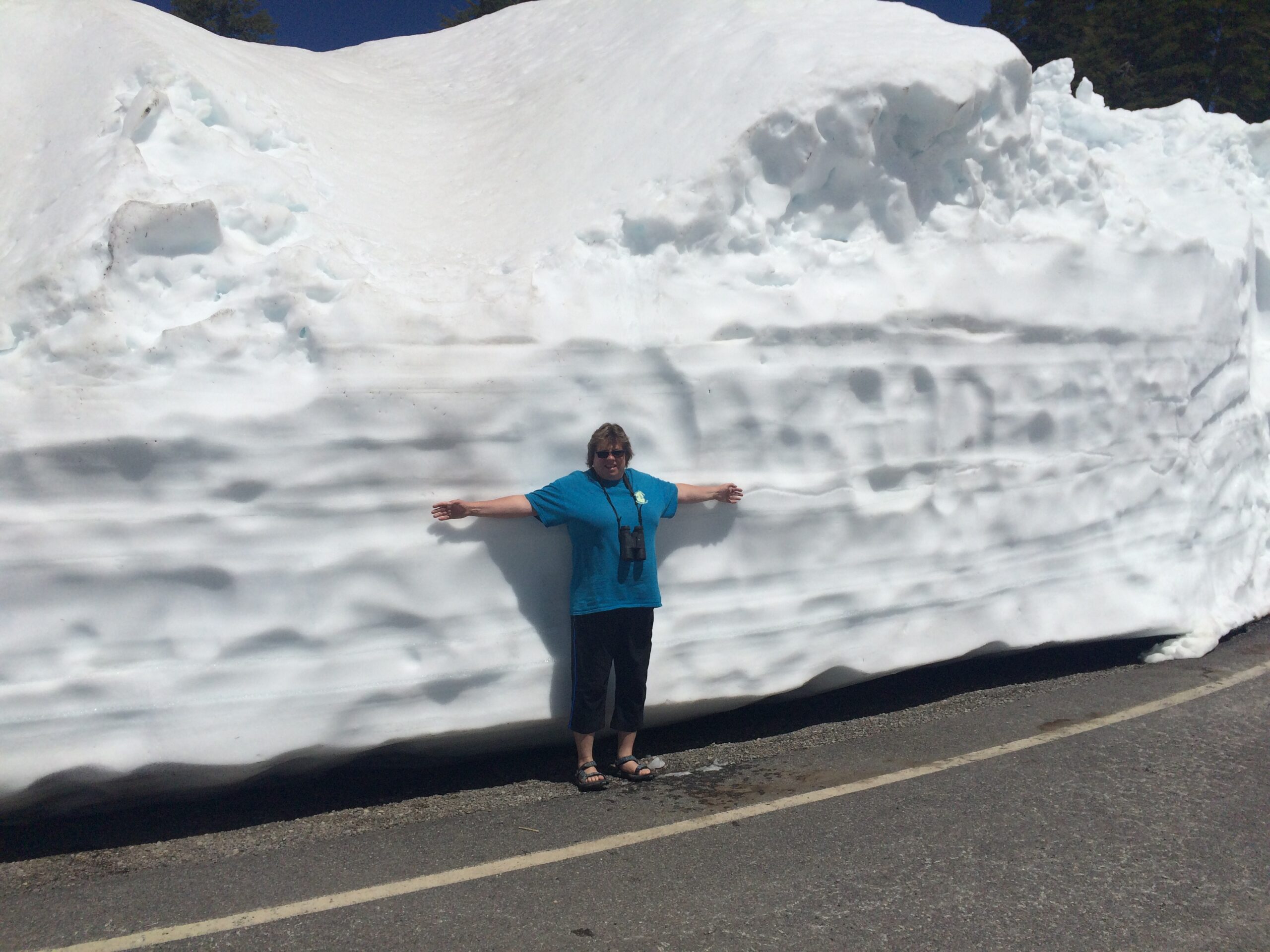
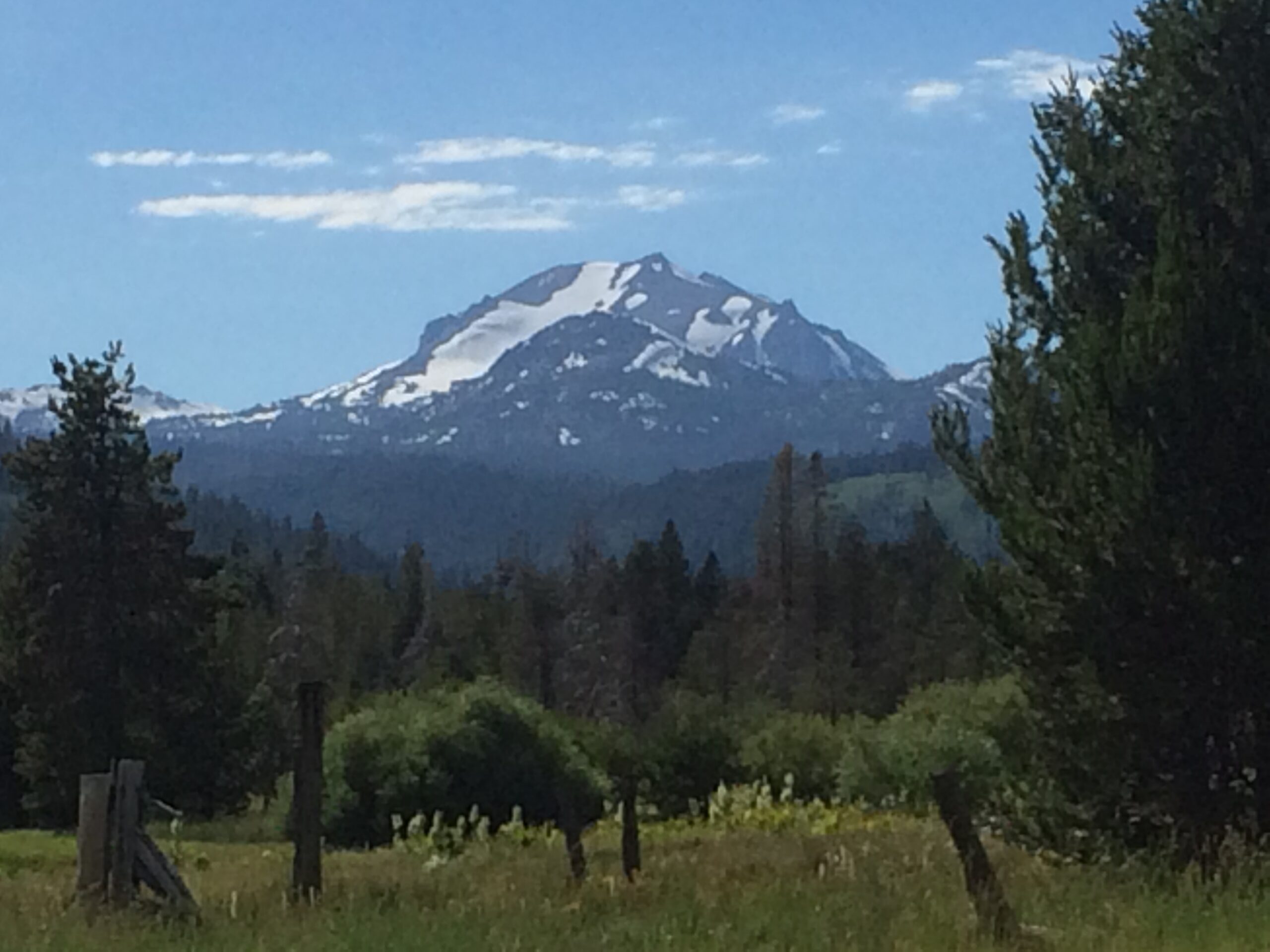
I camped nearby and visited what I could of the beautiful place. The park receives 33-42 feet of snow annually. The road across the park is the highest in the Cascade Mountains, over 8500 feet at its highest point. It is steep and windy, and prone to avalanches. Usually the main road is plowed and fully open sometime between early May and mid-July. The road is closed again due to snow sometime between late October and mid-December. In 2017, the equipment operators were working hard, but the road was not fully open until July 8. I was a few days early. I got good views of Lassen Peak and Cinder Cone, but I will need to return to climb Lassen Peak.
The Lassen staff put me in touch with the curator at Redwood National Park, where the collections are stored. Redwood was not on my route that trip and there is no direct highway between Lassen and Redwood. The curator at Redwood later moved on, my travel plans did not include northern California, Covid-19 delayed everything, and significant time elapsed before a new permanent curator was on board at Redwood NP in the summer of 2021.
I had wonderful assistance from Karin Grantham, Chief of Resource Management and Science, at Redwood National Park who sent me the archival finding guides in advance, so I could study up on the collections available. When I finally went there, Curator Joshua Bradford provided much assistance in getting me the boxes of materials that I would look through to see what I could find about Theodore Roosevelt.
I was glad to finally see what the collections would reveal about two of the 18 national monuments that Theodore Roosevelt set aside for the American people.

On June 2, 1905, Theodore Roosevelt proclaimed the Lassen Peak Forest Reserve in the mountains of northern California. When the first Forest Supervisor, L.A. Barrett, arrived in the area, the local people were skeptical. Most were not in favor of federal control. However, the multiple use philosophy of the Forest Service created many jobs. Power companies, railroads, timber harvesters, sawmills, and miners were welcomed onto the forest.
Although Barrett wanted the Forest Service to continue to manage the forest for multiple uses, he also saw that certain parts were being severely impacted. After the Antiquities Act passed and was signed by Theodore Roosevelt in 1906, Barrett recommended that some of the forest be set aside as four separate national monuments to protect Lassen Peak and Cinder Cone, as well as a hot springs and other unique areas. He wanted grazing and lumbering to continue in the area, but not at the expense of all of the unique features and scenic beauty. He was especially concerned about private development – the possibility of hotels and bath houses at the hot springs, and placer mining claims that were scattered everywhere.
On May 6, 1907, President Roosevelt proclaimed two of the recommended monuments – Lassen Peak and Cinder Cone. In both cases, his proclamations ensured that the monuments would be the “dominant reservations,” meaning that they would receive higher protection when there was a conflict with Forest Service policies. He established Cinder Cone National Monument to protect the important feature and the adjacent lava field as well as two small lakes. He proclaimed Lassen Peak National Monument because it marked “the southern terminus of the long line of extinct volcanoes in the Cascade Range… and is of special importance in tracing the history of the volcanic phenomena of that vicinity.”
Seven years later, on May 30, 1914, Lassen Peak erupted.
Eruptions were minor at first, but increased in intensity for a year. The biggest eruption occurred on May 22, 1915 and the last occurred in 1917. The eruptions brought a lot of attention to Lassen Peak, with reporters, scientists, and tourists wanting to explore the area.
Local Congressman John E. Raker first introduced a bill to establish “Peter Lassen National Park” in February 1912. The proposed park included the 1280 acres of Lassen Peak National Monument and the 5120 acres of Cinder Cone National Monument as its core. Establishing a national park is never easy. The bill didn’t pass, so he introduced a new bill in March, and another in 1913. The Forest Service was generally not in favor of a national park that would end many of the utilitarian uses of the forest. But when Lassen Peak erupted, sentiments changed. Local people advocated strongly for a national park. A Lassen National Park committee formed. Local business owners and professionals from many walks of life signed petitions in favor of the park. On August 9, 1916, Lassen Volcanic National Park was finally established. Sixteen days later, on August 25, 1916, the National Park Service was established to manage the national parks and monuments.
The beginnings of the national park were rough, as Congress did not provide appropriations to operate and manage the park for many years. It was managed by the Forest Service as a hybrid between a national park and a national forest. But in time, Lassen Volcanic National Park became a respected part of the National Park System.
Searching the archives, I found over a hundred interesting documents including the proclamations of the monuments by TR. There were many memos and letters between the Forest Service and the Department of Interior debating issues of park establishment and management, and petitions signed by original supporters of the national monuments and the national park.
It is by no means the most significant item in the collection, but one that caught my eye was a speech read by the Secretary of Interior at the dedication of the national park, which didn’t take place until July 1931 – 15 years after it was officially established. The speech gives President Taft credit for proclaiming the national monuments that led to the establishment of the park. Uh oh. We will likely never know whether he actually read it that way, or whether he corrected the error in real time.
Many people only know that Lassen Volcanic National Park was established in 1916. But it is important to remember that the two national monuments proclaimed by Theodore Roosevelt in 1907 still make up the core of the exceptional national park today.
