Gregory A. Wynn Theodore Roosevelt Collection
The Power and Pleasure of Music
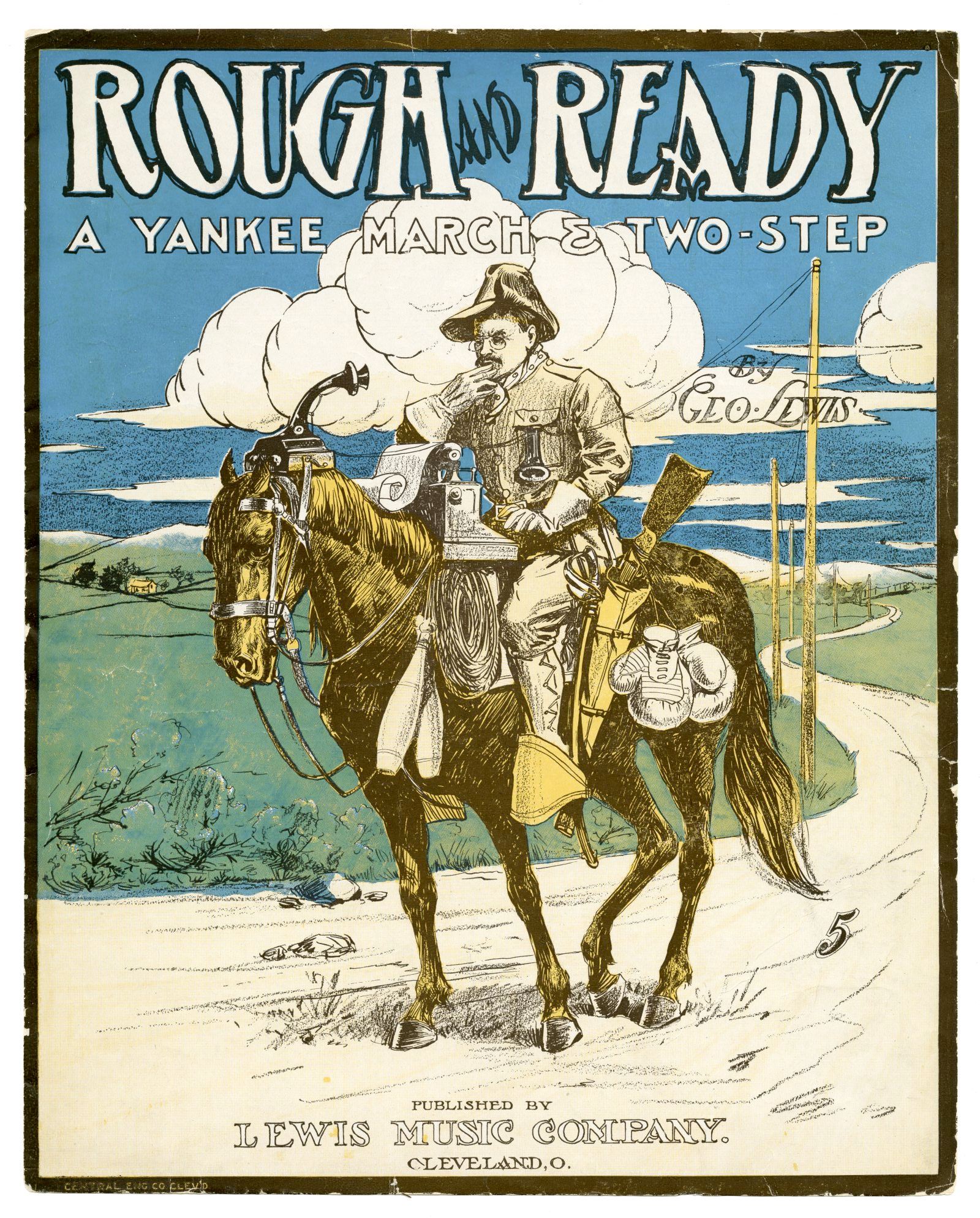
Music is a reflection of its era and a permanent part of our mental landscape. The Beatles, The Grateful Dead, Elvis Presley, and The Glenn Miller Band conjure not just the music but the feelings and events of the time. Theodore Roosevelt does not immediately come to mind when discussing musical culture. His own musical inclinations were minimal at best. However, the large number of musical compositions dedicated to TR over the course of two decades reflects TR’s vivid hold on the American consciousness. More than newspapers (to be expected), more than campaign mementos (part of the process), and more than books (few of his volumes or contemporary biographies were best sellers), it was this music – the rags, the marches, the waltzes – that brought TR into the American home, concert hall, parks, and parades.
Comprising two or more pages of music and lyrics, with covers on the front and back, sheet music was the iTunes of the early 20th Century. At home, families would gather around to hear compositions played on the piano. Stores would prominently display them for sale. Bands at public events would play popular scores. The subjects were as varied as music is today spanning love, loss, humor, current events, and clearly, Theodore Roosevelt. Since there was not any definitive method of keeping track of musical compositions it is hard to say how many were dedicated to TR. However, as a result of collecting TR themed sheet music for twenty years and having gathered over 120 different pieces, I know they certainly number into the hundreds. Further, this does not take into account all of the music written with his children as the subject. There are at least thirty different pieces of Alice Roosevelt Longworth compositions inspired by her popular White House wedding, among them Daughter of the Nation and Alice Blue Waltzes. Several were written upon Quentin’s death. And, at least one was dedicated to TR Junior during his unsuccessful 1924 campaign for governor of New York.
The earliest TR music appeared as a result of his martial exploits during the Spanish American War. Such compositions as “Governor Roosevelt’s Rough Riders” number in the dozens. As magazines do even today the same composition would sometimes be published with different cover art perhaps to boost sales or to adorn later printings. For example, James W. Casey’s 1898 Charge of the Rough Riders has at least three different covers. It is the covers that have sparked my own interest in TR music as, like TR, I am not musically inclined. The covers are graphic, colorful, sometimes odd, and seemingly never ending. From 1898 onward very few of TR’s exploits escaped composers’ notice. Even specific events warranted their own songs. For example, there is Our President Roosevelt’s Colorado Hunt and Trip from Washington to Panama. The latter appeared at the time of Roosevelt’s presidential trip to Panama, the first time a president had left the country while in office. Even the President’s visit to the World’s Fair in 1904 received its own composition, Roosevelt’s Day at St. Louis Fair, written by a Miss Gertie Gray (a wonderfully appropriate mid-western name). Those written during his presidency were more subdued in tone but included the charming Teddy. Campaign music was popular at rallies and while the President’s uncharacteristically dull re-election campaign in 1904 resulted in some campaign tunes, the fervent 1912 Progressive effort sparked such fighting titles as We Stand at Armageddon and was the inspiration behind The Bull Moose Glide and We’re Ready for Teddy Again.
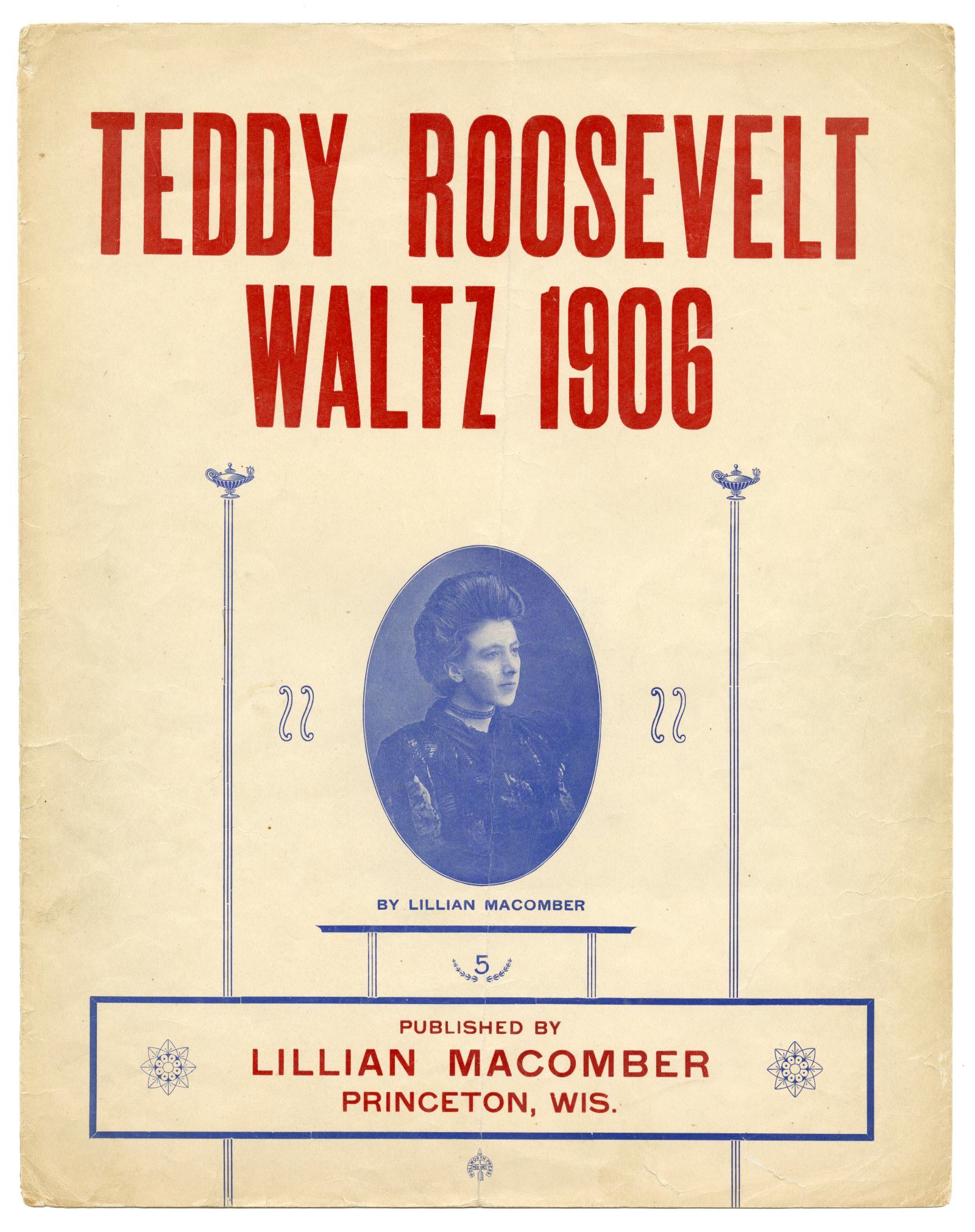
Yet, it was Roosevelt’s 1910 African trip that seems to have spawned the most music, issued both prior to his departure and upon his triumphant return. He was at the apex of his worldwide popularity, and it is certainly reflected in this music. Unfortunately so is the ugly side of American prejudices, as reflected in Teddy’s Nig. Despite its dedication “with due apologies to the African jungle folks,” this title and composition reveal the commonly held prejudice of the times.
Europe too is represented in the collection with a 1910 score from Germany (coinciding with TR’s visit) entitled Uncle Teddy. There is even a subtle note of exasperation at the Taft administration hinted at by the music I’d Rather Be With Teddy in the Jungle. Not even Theodore Roosevelt’s death in 1919 could stop the composers, as numerous memorial tributes such as Friend of the World were published to remember the great American.
Interestingly, the height of Roosevelt’s popularity coincided with the peak of American sheet music publication which spanned 1900-1920. By the 1920’s, while still popular, the output of compositions did not rival those of the preceding two decades as talkies and the radio slowly became the mediums of entertainment.
This music is simply fun to collect. It never ceases to amaze me when yet another piece is discovered. Yet, almost by accident, collectively, the music has evolved into a substantive and important archive representing a forgotten aspect of American culture and TR’s central role in it. It is not comprehensive nor can we know if it ever can be. While I am aware of at least one other important TR sheet music collection belonging to a private collector, there are only about twenty pieces between the two that are not included in the other. And, of course, there are the ones that got away in auctions and sales. The Theodore Roosevelt Center’s efforts to scan this music and record select pieces stands as a substantive and truly unique contribution to Roosevelt studies. It reinforces the important role collections and private collectors have in regard to scholarship. The enthusiasm and passion that is involved with these acquisitions – these objects — can lead to insights that biographers and historians can’t express in the written medium.
Duke University possesses a significant collection of American sheet music. In their website’s introduction to the collection they summarize the impact of sheet music as such:
“An examination of sheet music reveals something of the inner life of the American citizenry in a way distinguishable from diaries and newspaper accounts, while also more intimate than the historian’s descriptive synthesis. Use of these materials in conjunction with letters and diaries can make history more personal. A soldier’s mention of a song sung around the campfire in a letter to his family makes us more aware of the daily life of that man. To actually see the music and sing it ourselves transports us to that place and time for a moment.”*
I would suggest that in this same spirit, through the Theodore Roosevelt Center’s efforts, historians and researchers now have a new perspective on Theodore Roosevelt, and with their performance all of us can become Bull Moosers for a day!
*http://library.duke.edu/rubenstein/scriptorium/sheetmusic/about.html